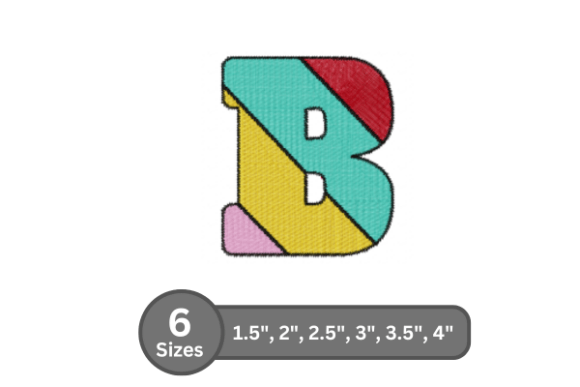
Candy Stripe Alphabet -B: A Practical Evaluation for Embroidery Designers
In the realm of machine embroidery, the difference between a professional finish and an amateur attempt often lies in the quality of the digitized font. The Candy Stripe Alphabet -B represents a specific approach to fill stitch typography that prioritizes structural integrity and visual clarity. Unlike decorative scripts that rely on thin lines prone to breaking or tangling, this design utilizes a robust fill stitch architecture. For professionals managing tight deadlines and hobbyists seeking reliable results, understanding the mechanics and application of this specific alphabet is essential for optimizing workflow and output quality.
The Mechanics of Fill Stitch Digitization
The core value proposition of the Candy Stripe Alphabet -B is its careful digitization process. In embroidery, "fill" refers to the dense stitching used to cover an area, creating a solid block of color. Poorly executed fills can result in puckering, uneven density, or thread breaks. This particular font has been engineered to mitigate these common issues. The digitizer has likely adjusted the pull compensation and underlay settings specifically for the curves and angles inherent in the candy stripe motif.
When evaluating a font like this, one must look at how the software translates vector paths into stitch commands. The smooth stitching mentioned in its description suggests that the transition points between different stitch directions are handled seamlessly. This is critical when working with stretchy fabrics or delicate materials where tension management is paramount. The result is a bold, classic appearance that maintains its shape regardless of the substrate, provided the correct stabilizers are used.
Visual Impact and Design Intent
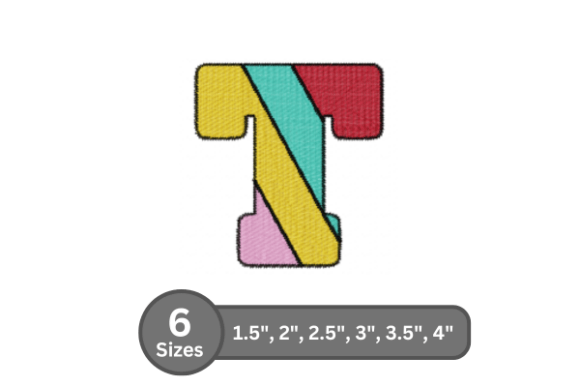
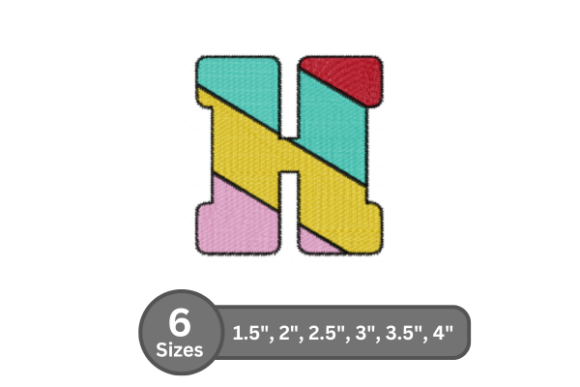
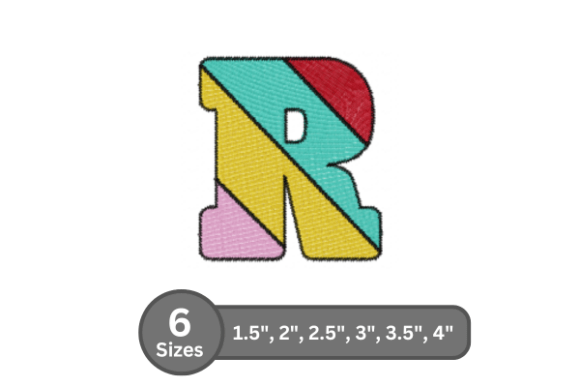
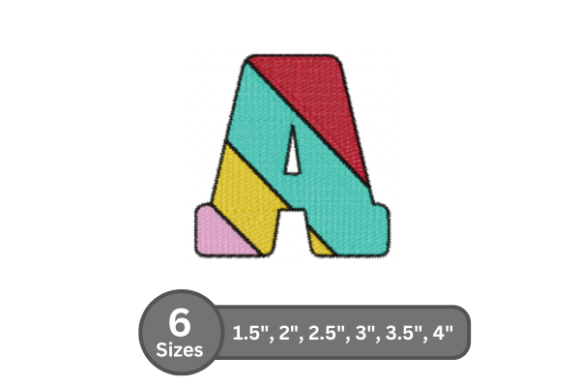
Visually, the Candy Stripe Alphabet -B offers a distinct aesthetic. The "candy stripe" element implies a patterned fill rather than a solid block, adding texture and depth to the lettering. This makes it particularly effective for projects requiring a touch of nostalgia or playful elegance without sacrificing readability. The bold nature of the font ensures legibility even at smaller sizes, which is a significant advantage for personalizing items like tote bags or garment tags where space is limited.
However, the effectiveness of this style depends heavily on the context. While it excels on structured surfaces like towels, denim, or canvas, it may require careful consideration on very fine silks or sheer materials where the weight of the thread could distort the fabric. The design's strength lies in its ability to deliver a professional look that stands out against various background colors, making it a versatile asset for a diverse portfolio of projects.
Workflow Integration and File Compatibility
For entrepreneurs and small business owners, time efficiency is as important as the final product. One of the practical strengths of the Candy Stripe Alphabet -B is its availability in multiple embroidery file formats. Modern embroidery machines vary significantly in their proprietary requirements, from PES for Brother machines to DST for industrial Tajima units, and JEF for Janome models. A font that comes pre-converted saves hours of manual re-digitizing or risky third-party conversion attempts that can degrade stitch quality.
This multi-format support streamlines the production process. A designer can maintain a single library of assets while catering to clients who use different hardware. It eliminates the friction of compatibility errors, ensuring that the design intended by the creator is exactly what appears on the hooped fabric. For freelancers juggling multiple client requests, this reliability reduces the risk of last-minute technical failures during production runs.
Usability Across Different Machines
The claim that this font is designed for "multiple embroidery machines" speaks to the universality of its digitization logic. High-quality fonts are not just about the visual path; they are about the underlying stitch data. The Candy Stripe Alphabet -B appears to utilize standard trims and jumps that are generally recognized across major machine brands. This consistency allows users to swap between home hobby machines and commercial production units without needing to adjust settings drastically.
Nevertheless, users should still perform a test run on a scrap piece of fabric similar to their final project. Even with excellent digitization, variables such as needle type, thread brand, and machine tension can influence the outcome. The font provides a solid foundation, but the operator's skill in matching materials remains a crucial factor in achieving the advertised "professional results."
Practical Applications and Project Suitability
The versatility of the Candy Stripe Alphabet -B makes it suitable for a wide range of applications, from personalized gifts to branded merchandise. Its bold, stitched look pairs exceptionally well with items that benefit from a tactile, high-contrast finish. Common use cases include:
- Apparel Branding: Ideal for customizing t-shirts, hoodies, and caps where durability is required. The fill stitch holds up well to repeated washing, maintaining the integrity of the logo or text.
- Home Décor: Perfect for monogramming towels, pillowcases, and table runners. The textured fill adds a layer of sophistication that flat printing cannot replicate.
- Accessories: Suitable for bags, backpacks, and keychains. The design's clarity ensures that names or short messages remain readable even on curved or irregular surfaces.
- Event Merchandise: Effective for creating uniforms or commemorative items for schools, sports teams, and corporate events where a cohesive, polished look is necessary.
Considerations for Small Business Owners
For those running embroidery businesses, the long-term value of a font like this lies in its repeatability. Consistency is key when fulfilling bulk orders. If a font performs well on the first sample, it should perform identically on the hundredth item. The Candy Stripe Alphabet -B, with its carefully constructed stitch paths, minimizes the variance often seen in lower-quality designs. This reliability builds trust with clients and reduces material waste caused by failed stitches or design flaws.
Furthermore, the ease of use allows business owners to expand their service offerings quickly. By integrating this font into their existing design suite, they can offer a new stylistic option to customers without investing in expensive custom digitizing services. This scalability is a significant economic advantage for growing enterprises.
Limitations and Professional Observations
While the Candy Stripe Alphabet -B offers many advantages, it is not a universal solution for every embroidery scenario. The fill stitch nature of the design means it uses more thread than a simple outline or satin stitch font. For projects with strict cost constraints or where minimizing thread consumption is a priority, this might be a limiting factor. Additionally, the density of the fill requires adequate stabilization. Without proper backing, heavier fabrics might pucker around the letters, detracting from the professional finish.
Another consideration is the size limitation. While the font is bold, extremely small sizing (below 0.5 inches) may cause the intricate details of the candy stripe pattern to blur or become indistinct. Users should adhere to recommended minimum dimensions to preserve the design's clarity. Similarly, on very dark fabrics, the contrast of the stripes might diminish if the thread color is not chosen carefully, potentially reducing the visual impact.
Evaluating Long-Term Value
Ultimately, the decision to incorporate the Candy Stripe Alphabet -B into a creative toolkit should be based on a balance of aesthetic goals and technical requirements. For creators who prioritize a classic, bold look and need a reliable, multi-format resource, this font presents a strong case. Its careful digitization ensures that the time invested in setting up the project yields consistent, high-quality results. However, it requires the user to understand the fundamentals of fabric preparation and machine setup to fully realize its potential.
In the competitive landscape of custom embroidery, having access to well-engineered assets is a distinct advantage. The Candy Stripe Alphabet -B serves as a testament to the importance of quality digitization. It bridges the gap between creative vision and mechanical execution, allowing professionals and serious hobbyists alike to produce work that stands the test of time and wear. Whether for a one-off personalized gift or a large-scale branding initiative, its practical utility makes it a worthwhile addition to any embroidery library.