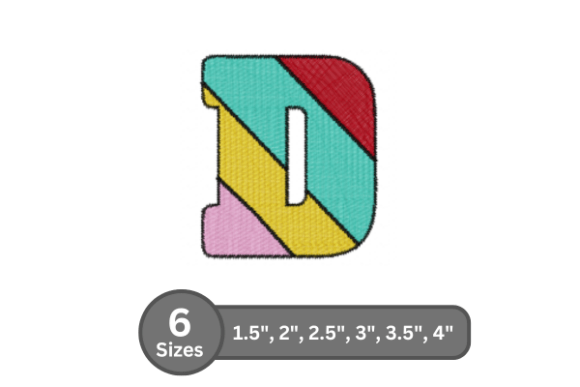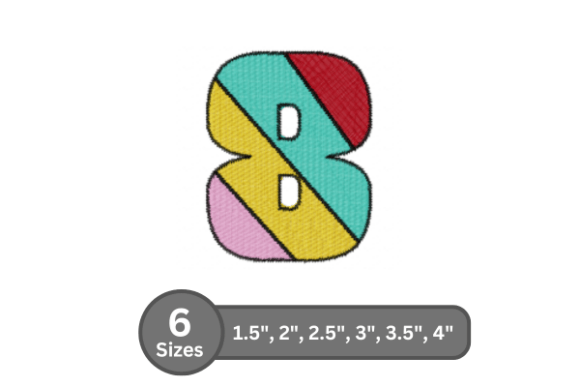
Candy Stripe Number - 8: A Deep Dive into Professional Fill Stitch Typography
In the evolving landscape of machine embroidery, the choice of font often dictates the visual impact and technical success of a project. Among the myriad options available to digitizers and stitchers, Candy Stripe Number - 8 stands out as a distinct solution for those seeking bold, legible, and aesthetically pleasing numeric designs. This fill stitch embroidery font was carefully digitized for smooth stitching and professional results, addressing common pain points such as thread breaks, registration issues, and fabric distortion that often plague complex alphanumeric designs.
Unlike standard outline fonts or simple satin stitches, this design leverages the density and texture of fill stitching to create a solid, classic look. Whether you are a hobbyist personalizing a child's backpack or a business owner branding corporate uniforms, understanding the mechanics and applications of this specific digitization can elevate the quality of your finished goods significantly.
The Technical Architecture of Smooth Stitching
The primary advantage of Candy Stripe Number - 8 lies in its underlying digitization strategy. Creating a font that looks good on a screen is one thing; translating that image into thousands of precise needle movements without compromising structural integrity is another. This font has been engineered with specific attention to underlay patterns, pull compensation, and stitch direction.
When a machine executes a fill stitch, it lays down rows of thread side-by-side. If the angle changes too abruptly or the density is miscalculated, the fabric can pucker, or the thread may tangle. The designers behind this alphabet font prioritized "smooth stitching" by ensuring that the transition between different angles within the number "8"—a character notoriously difficult due to its intersecting curves—is handled seamlessly. The result is a design that maintains its shape even on stretchy knits or delicate wovens.
Furthermore, the careful digitization ensures that the font is compatible with a wide range of hoop sizes and stabilizer types. For professionals managing high-volume production runs, this reliability translates to fewer reworks and less wasted material. The consistency of the stitch count allows for predictable timing and cost estimation, which is crucial for embroidery businesses operating on tight margins.
Expanding Creative Horizons Across Textiles
The versatility of Candy Stripe Number - 8 extends far beyond simple labeling. Because the font is designed for embroidery machines and offers a robust, bold appearance, it opens up a variety of creative avenues for personalizing clothing, bags, towels, and home décor projects. The thick, filled nature of the numbers makes them highly visible from a distance, making them ideal for team jerseys, event shirts, or promotional items where brand recognition is key.
Consider the application on heavy-duty canvas tote bags. A thin satin stitch might get lost against the coarse texture of the fabric, but the substantial presence of this fill stitch font cuts through the background noise, creating a crisp, modern statement. Similarly, on plush towels or bathrobes, the softness of the fill stitch complements the pile of the fabric, adding a tactile dimension to the design that flat printing simply cannot achieve.
For home décor enthusiasts, this font offers a way to add a personalized touch to throw pillows, wall hangings, and kitchen linens. Imagine a set of napkins embroidered with table numbers for a wedding reception, or a nursery blanket featuring a child's birth year rendered in this classic style. The "Candy Stripe" aesthetic implies a playful yet structured vibe, fitting well within themes ranging from vintage retro to contemporary minimalist.
Strategic Use Cases for Business Owners
Business owners looking to differentiate their merchandise will find value in the unique characteristics of this font. In an era where customization is expected, offering a distinctive typographic style can be a competitive edge. The font's ability to produce professional results quickly allows small batch producers to offer premium, made-to-order services without the overhead of custom digitization fees.
Moreover, the design's adaptability means it can be scaled effectively. While some fonts lose clarity when enlarged or reduced, Candy Stripe Number - 8 retains its structural integrity across various sizes. This scalability is essential for businesses that need to apply the same branding element to everything from a small hat patch to a large banner. The consistent quality ensures that the brand image remains cohesive regardless of the product size.
Navigating File Formats and Machine Compatibility
A critical aspect of any digital embroidery asset is its compatibility with existing hardware. One of the standout features of this machine embroidery design is that it comes with multiple embroidery file formats. The industry uses a fragmented ecosystem of proprietary formats, ranging from .PES for Brother machines to .DST for Tajima industrial units, and .JEF for Janome devices.
By providing a comprehensive suite of formats, the creators of this font remove a significant barrier to entry. Users do not need to invest in expensive conversion software or risk the degradation of stitch data during translation. Whether you are working with a domestic hobby machine in a home studio or a multi-head industrial system in a factory, the design is ready to load and run immediately.
This multi-format availability also supports collaborative workflows. Design agencies can share files with clients who own different machinery brands without friction. It streamlines the supply chain for embroidery shops that service diverse client bases, ensuring that the vision for the project is executed exactly as intended, regardless of the specific equipment used on the shop floor.
Aesthetic Impact: The Classic Bold Look
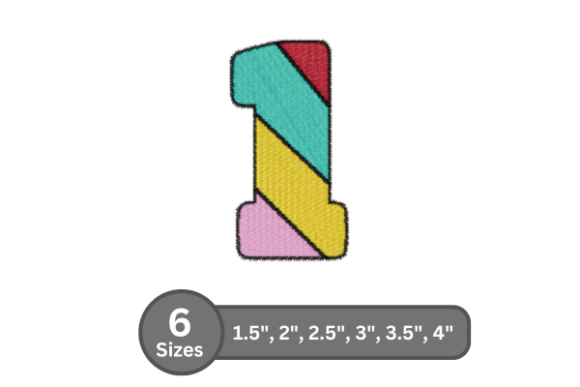
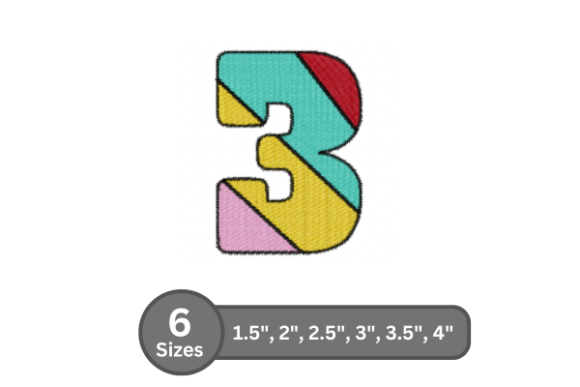
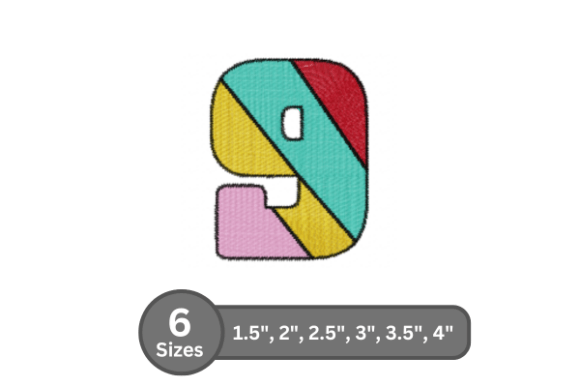
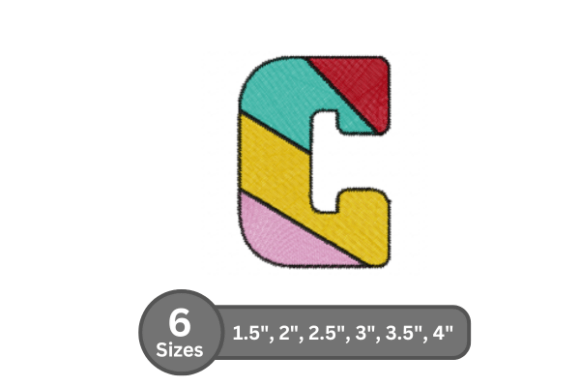
Beyond the technical specifications, the visual language of Candy Stripe Number - 8 plays a pivotal role in its appeal. The font delivers a classic and bold stitched look that resonates with current design trends favoring retro-modern aesthetics. The term "Candy Stripe" evokes imagery of alternating colors and playful patterns, yet the execution here leans towards a solid, authoritative presence suitable for both formal and casual contexts.
The boldness of the fill stitch creates a sense of weight and permanence. In contrast to the delicate, airy feel of openwork or lace fonts, this design anchors itself on the fabric. This characteristic makes it particularly effective for numbering systems where legibility is paramount, such as sports uniforms, library books, or archival textiles. The high contrast between the filled areas and the negative space ensures that the numbers are readable even under poor lighting conditions or from a moving vehicle.
Additionally, the "easy-to-use" nature of the font encourages experimentation. Creators are more likely to try new color combinations or placement strategies when they know the digitization is forgiving and reliable. This ease of use fosters creativity, allowing users to focus on the artistic composition rather than troubleshooting technical glitches. The result is a higher volume of successful projects and a greater willingness to push creative boundaries.
Integrating into Complex Designs
While Candy Stripe Number - 8 works beautifully as a standalone element, it also integrates seamlessly into larger, complex compositions. Digitizers often combine text with pictorial elements, logos, or decorative borders. The clean lines and defined edges of this font prevent it from clashing with intricate surrounding details. Instead, it acts as a strong focal point that organizes the design.
For educators and researchers documenting textile history or techniques, this font serves as an excellent example of modern digitization efficiency. It demonstrates how software algorithms can optimize thread paths to reduce waste while maximizing aesthetic output. Studying the construction of such fonts provides insight into the intersection of art and engineering that defines the modern embroidery industry.
Considerations for Optimal Execution
To fully leverage the potential of this font, users should consider a few practical factors regarding material selection and machine setup. While the font is designed for smooth stitching, the choice of stabilizer remains critical. For lightweight fabrics like silk or fine cotton, a tear-away or cut-away stabilizer matched to the fabric weight will ensure the fill stitch does not distort the weave. On heavier materials like denim or fleece, a medium-weight stabilizer usually suffices, allowing the bold numbers to sit proudly on the surface.
Thread tension is another variable to monitor. Fill stitches require slightly different tension settings compared to satin stitches to avoid gaps or puckering. Since this font relies on dense coverage, ensuring the bobbin tension is correctly balanced with the top thread will result in a flawless finish. Regular maintenance of the machine needle and hook area is also recommended, as running dense fills can generate more heat and friction than simpler designs.
Color selection can dramatically alter the perception of the "Candy Stripe" theme. While traditional red and white stripes come to mind, the fill stitch format allows for monochromatic elegance or vibrant, multi-colored gradients if the machine supports color changes within the design. Experimenting with metallic threads or variegated yarns can further enhance the textured look, adding depth and luxury to the final product.
Conclusion on Utility and Value
The Candy Stripe Number - 8 font represents a convergence of aesthetic appeal and technical precision. By prioritizing smooth stitching and professional results, it addresses the core needs of a diverse audience ranging from hobbyists to industrial manufacturers. Its compatibility with multiple machines and file formats ensures accessibility, while its bold, classic look guarantees visual impact across a wide array of applications.
As the demand for personalized and high-quality embroidered goods continues to grow, tools that simplify the creation process without sacrificing quality become increasingly valuable. This font not only facilitates the production of personalized clothing, bags, towels, and home décor projects but also empowers creators to execute their visions with confidence. In the realm of machine embroidery, where the difference between a good design and a great one often comes down to the details of digitization, Candy Stripe Number - 8 proves to be a reliable and versatile asset for any stitcher's toolkit.