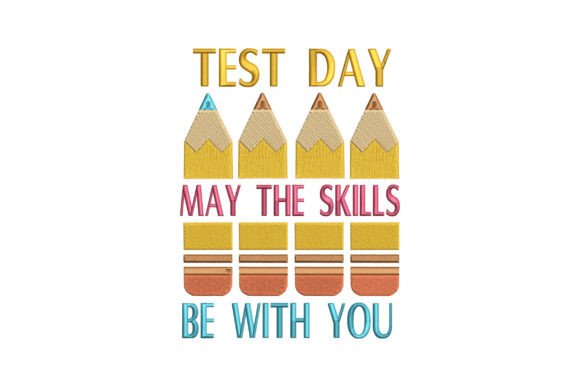
Test Day May the Skills Be with You: A Stylish Embroidery Update
There is a unique satisfaction in transforming a plain, off-the-rack item into something that speaks directly to your personality or supports someone else's journey. The Test Day May the Skills Be with You machine embroidery design captures this perfectly. It blends a touch of pop culture nostalgia with genuine encouragement, making it an ideal choice for students facing finals, professionals preparing for certification exams, or anyone navigating a challenging evaluation period. This delightful design offers more than just a phrase; it provides a vibrant and imaginative flair that can elevate t-shirts, towels, home decor, and beyond.
However, moving from a digital file to a physical, stitched masterpiece requires more than just hitting "start" on your machine. Many enthusiasts, whether beginners or seasoned hobbyists, overlook critical details that can compromise the final result. Understanding how to properly utilize this specific design ensures your project looks professional rather than amateurish. Let's explore how to get the best out of this creative asset while avoiding common pitfalls that often lead to wasted time, fabric damage, or unsatisfactory outcomes.
Understanding the Appeal and Versatility
The charm of Test Day May the Skills Be with You lies in its adaptability. Unlike rigid, formal designs, this motif invites customization. It works exceptionally well as a morale booster on a student's hoodie before a big exam or as a subtle, witty accent on a kitchen towel for a teacher's gift. The design is structured to be compatible with multiple embroidery file formats, ensuring it runs smoothly on a wide range of embroidery machines. This compatibility is a significant advantage, but it also introduces a layer of complexity that users must navigate carefully.
When you download a design like this, you are acquiring a set of instructions for your machine. The quality of the output depends entirely on how those instructions are interpreted by your equipment and how you prepare the materials. A successful application turns a simple cotton tee into a conversation starter, while a poor execution can ruin the garment. The goal is to achieve crisp lettering and balanced imagery that holds up through washes and wear.
Common Pitfalls in Design Selection and Preparation
One of the most frequent mistakes creators make is assuming that a single file size fits every project. The Test Day May the Skills Be with You design may come in various dimensions, but blindly selecting the largest option for a small area, such as a cap or a baby onesie, leads to distorted stitching. Conversely, using a tiny version on a large tote bag can make the text illegible and the imagery lose its impact.
Mistake: Downloading the file and immediately attempting to stitch it without resizing or stabilizing appropriately.
The Consequence: This often results in puckered fabric, broken threads, or misaligned letters. If the design is too dense for the chosen fabric, the needle will pull the material, creating a wrinkled appearance that cannot be ironed out.
To avoid this, always evaluate the intended surface area first. Measure the space where you want the design to sit and adjust the file size within your software accordingly. Remember that scaling a design down too much can cause stitches to merge, blurring the message. Similarly, scaling up excessively might thin out the stitch density, leaving gaps in the fill areas.
The Critical Role of Stabilization
Fabric choice dictates stabilization needs, yet this step is frequently rushed. A lightweight t-shirt requires different support than a thick bath towel. For the Test Day May the Skills Be with You design, which likely includes both satin stitches for outlines and fill stitches for background elements, proper backing is non-negotiable.
- For T-shirts: Use a tear-away or cut-away stabilizer depending on the fabric stretch. Knits need more support to prevent distortion during the high-speed movement of the needle.
- For Towels: Loop pile fabrics are tricky. They require a heavy-duty cut-away stabilizer and often a water-soluble topping to prevent the loops from being caught in the stitching.
- For Home Decor: Linens and canvas usually hold their shape better but still benefit from a medium-weight tear-away to ensure smooth feeding under the hoop.
Skip this step, and even the most beautiful design will look sloppy. The tension between the thread and the fabric will fight against each other, leading to loose loops or snapped needles.
File Formats and Machine Compatibility
A major selling point of this embroidery package is the inclusion of multiple file formats. While this sounds convenient, it can be a source of confusion if you do not know your machine's specific requirements. Not all machines read every format natively. Attempting to force a file type your machine does not recognize, or using a converter that alters stitch data, can corrupt the design.
Better Approach: Before purchasing or downloading, verify the list of included formats against your machine's manual. Common formats include .PES, .DST, .JEF, and .VIP. If your machine requires a specific proprietary format, ensure it is present in the download. Do not rely on third-party converters unless absolutely necessary, as they often miscalculate jump stitches or color changes, ruining the flow of the Test Day May the Skills Be with You sequence.
Additionally, check the stitch count. A higher stitch count generally means more detail but takes longer to embroider and uses more thread. If you are working on a tight deadline for a test day gift, balance the detail level with the time required to complete the run.
Thread Choices and Color Planning
The vibrancy of the design relies heavily on thread selection. Using cheap, low-quality thread can result in excessive lint buildup, frequent breakage, and dull colors that fail to capture the "imaginative flair" promised by the design. Furthermore, matching thread to fabric color is an art. Placing dark thread on light fabric without proper underlay can show shadowing, while light thread on dark fabric may disappear entirely without a contrasting underlay.
Consider the context of the recipient. If this is for a student, bright, cheerful colors often work best to lift spirits. For a professional setting, perhaps a monochromatic scheme in navy or charcoal conveys sophistication. Always do a test run on a scrap piece of the same fabric you intend to use. This allows you to adjust tension settings and verify that the colors appear as expected before committing to the final product.
Evaluating Quality Before You Buy
Before making a decision to purchase or download the Test Day May the Skills Be with You design, take a moment to inspect the preview images closely. Look for clear stitch definitions and a logical color change sequence. High-quality designs provide a clean path for the needle, minimizing unnecessary trims and jumps.
Ask yourself these questions to ensure a smart investment:
- Does the design offer a variety of sizes suitable for my intended projects?
- Are the file formats compatible with my current and future machinery?
- Is there customer support or documentation available if I encounter technical issues?
- Have other users provided feedback on the stitching quality?
By taking these precautions, you protect your time and resources. A well-chosen design streamlines your workflow, allowing you to focus on the creative aspect of embellishing your items rather than troubleshooting errors.
Final Thoughts on Creative Execution
Embellishing t-shirts, towels, or home decor with the Test Day May the Skills Be with You design is a rewarding process when approached with care. It is about more than just adding text; it is about creating a tangible token of support and style. By respecting the mechanics of embroidery—choosing the right stabilizer, verifying file compatibility, and planning your thread colors—you ensure that the final product is durable, attractive, and meaningful.
Avoid the rush. Take the time to hooped correctly, trim excess stabilizer, and press the finished item gently. These small steps transform a standard machine output into a premium creation. Whether you are a beginner looking to learn the ropes or a professional seeking a quick update for your inventory, applying these principles will help you achieve consistent, high-quality results every time.