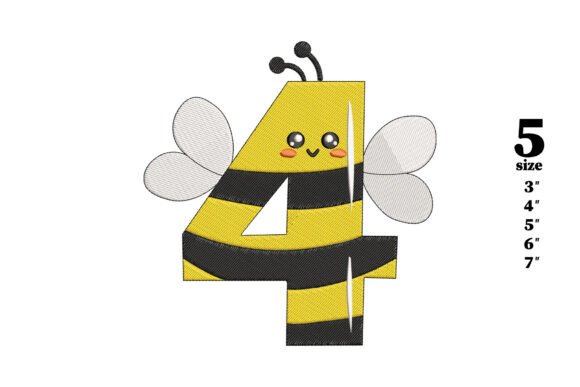
Bee in the Shape of the Number 4: A Practical Guide to Implementation
In the world of digital crafting and machine embroidery, the intersection of whimsical design and functional utility often yields the most effective results. The Bee in the Shape of the Number 4 is a prime example of this convergence. It is not merely a decorative motif; it is a strategic asset for creators who need to balance aesthetic appeal with specific project requirements. Whether you are a small business owner producing personalized gifts, an educator creating classroom materials, or a hobbyist refining your stitching portfolio, understanding how to integrate this specific design into your workflow can significantly enhance the quality and efficiency of your output.
This article explores the practical application of the Bee in the Shape of the Number 4 embroidery design. We will examine its role in project planning, technical compatibility, execution strategies, and long-term asset management. By treating this design as a component of a broader creative process rather than an isolated image, you can maximize its potential across various platforms and projects.
Defining the Asset and Its Role in Your Workflow
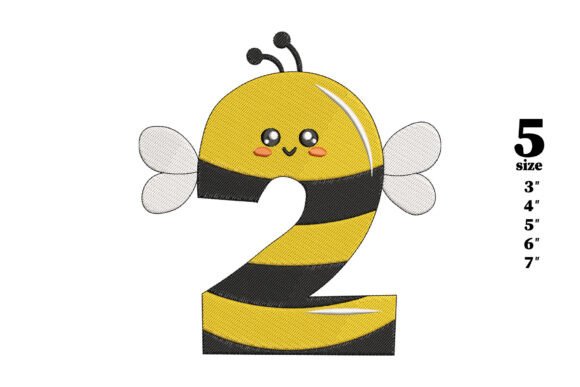
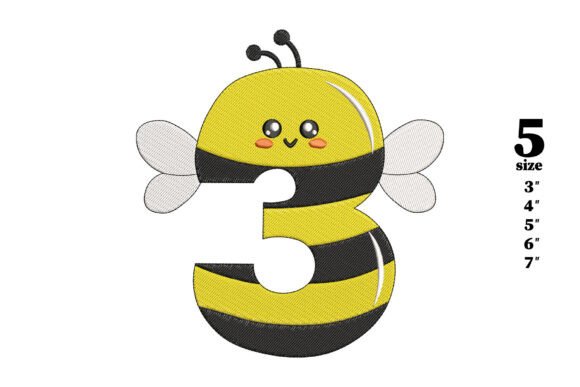
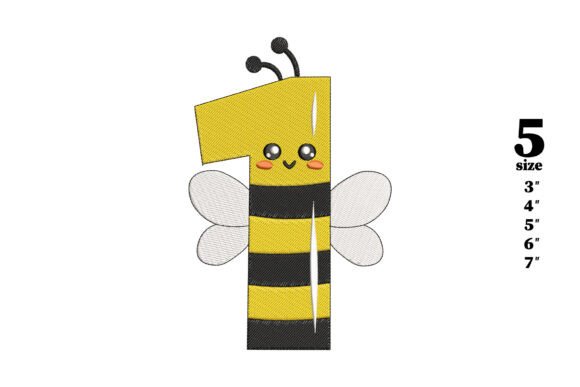
The Bee in the Shape of the Number 4 is a high-quality machine embroidery file that merges the organic, playful lines of a bee with the structured geometry of the numeral four. This dual nature makes it uniquely versatile. In a broader creative process, this design serves as a focal point that anchors a project's theme. It bridges the gap between celebratory occasions—such as fourth birthdays, anniversaries, or milestone achievements—and the desire for a cohesive, handcrafted look.
For professionals and entrepreneurs, this design functions as a modular element within a product line. Instead of starting from scratch every time a client requests a number-themed item, having a polished, pre-tested design like this allows for rapid prototyping and consistent production. It fits into the "execution" phase of your workflow, where planning meets physical creation. Before you even load your hoop, this design represents a decision point: choosing a motif that communicates fun and elegance simultaneously without requiring excessive customization.
Pre-Project Planning and Preparation
Successful implementation begins before the machine needle ever touches the fabric. Integrating the Bee in the Shape of the Number 4 requires a brief but critical preparation phase. This stage involves assessing the project scope, selecting appropriate materials, and verifying technical compatibility.
Material Selection and Fabric Compatibility
The versatility of this design lies in its ability to adapt to various substrates. However, the outcome depends heavily on your initial choices. For home décor items like pillowcases or wall hangings, a medium-weight cotton or linen provides a stable base that supports the intricate details of the bee's wings and body. Conversely, if you are applying this to apparel, such as a commemorative t-shirt for a fourth-grade class, you may need to consider stabilizers to prevent puckering around the curves of the number.
When planning, ask yourself where the design will be placed. Is it a central element on a tote bag, or a subtle accent on a cuff? The scale of the Bee in the Shape of the Number 4 should be adjusted in your software prior to stitching to ensure it complements the garment or object's proportions. This pre-planning step saves time during the stitching process and reduces the likelihood of errors that require rework.
File Format Verification
A key advantage of this specific embroidery design is its inclusion of multiple file formats. In a professional workflow, file compatibility is non-negotiable. Different embroidery machines utilize different proprietary formats (e.g., .PES, .DST, .JEF, .VIP). Having access to these variations ensures that the design can be deployed across a fleet of machines or shared with collaborators who use different hardware.
Before purchasing or downloading, verify that the available formats match your current equipment. If you operate a mixed environment, this multi-format capability streamlines your inventory management. You do not need to convert files manually, which reduces the risk of digitization errors and preserves the stitch count integrity of the original design.
Execution: Stitching and Technical Integration
Once the planning phase is complete, the focus shifts to execution. The Bee in the Shape of the Number 4 is designed to be easy to stitch, but "easy" does not mean "effortless." Achieving the elegant, eye-catching finish described in the design specifications requires attention to thread tension, needle selection, and hoop placement.
Optimizing Stitch Density and Quality Control
The interplay between the solid areas of the number and the delicate lines of the bee requires careful monitoring. During the stitching process, keep an eye on the transition points where the bee's form merges with the numeral. High-density areas may require a slightly larger needle size or a change in stabilizer type to ensure the stitches lay flat. Regular quality control checks—pausing the machine to inspect the back of the work—can prevent issues like thread breaks or skipped stitches that could compromise the final aesthetic.
For those managing a production run, consistency is paramount. Set up your machine with a test run on a scrap piece of the same fabric intended for the final product. This calibration step ensures that the Bee in the Shape of the Number 4 looks identical across all units, maintaining brand integrity and customer satisfaction.
Integrating with Other Design Elements
Rarely does a single motif stand alone in a complex project. The Bee in the Shape of the Number 4 interacts well with other assets, such as monograms, borders, or complementary floral elements. When designing a layout, consider the visual weight of the number four. It acts as a strong anchor, allowing lighter, more airy designs to surround it without competing for attention.
In a business context, this design can be part of a larger template system. For example, a boutique offering birthday shirts might have a library of numbers, each paired with a thematic animal or object. The Bee in the Shape of the Number 4 becomes one node in this network, allowing for quick assembly of custom orders. This modularity increases efficiency, enabling you to fulfill diverse client requests without reinventing the wheel for every order.
Post-Production and Long-Term Utility
The value of the Bee in the Shape of the Number 4 extends beyond the immediate completion of a single project. It is an asset that contributes to long-term workflow efficiency and brand development.
Archiving and Organization
Effective digital asset management is crucial for any creator. Once you have successfully stitched and tested this design, archive it in a logical folder structure. Label the files clearly, noting the compatible formats and the types of fabrics used. This organization allows you to retrieve the design quickly for future projects, whether it is a repeat order or a new idea sparked by a previous success.
Consider creating a "swatch book" or digital portfolio that showcases the Bee in the Shape of the Number 4 on different backgrounds. This resource serves as a reference for clients, helping them visualize the final product and reducing the back-and-forth communication often associated with custom orders.
Expanding Use Cases
The applications for this design are expansive. Beyond traditional apparel and home décor, it can be utilized in educational settings to create engaging learning aids, in corporate gifting to celebrate team milestones, or in event planning for themed parties. Each use case presents an opportunity to refine your process. For instance, using the design on a variety of textures teaches you about thread tension adjustments, while applying it to different scales improves your understanding of digitization limits.
As you integrate the Bee in the Shape of the Number 4 into your routine, you build a repository of knowledge that informs future decisions. You learn which stabilizers work best for curved numerals, which threads provide the most vibrant contrast against dark fabrics, and how to market unique, number-themed products effectively.
Strategic Implementation for Diverse Audiences
Whether you are a freelancer juggling multiple clients or a hobbyist looking to elevate your craft, the principles remain the same: plan thoroughly, execute with precision, and organize for the future. The Bee in the Shape of the Number 4 offers a reliable, high-quality foundation upon which to build these practices.
For the entrepreneur, it represents a scalable product option that adds variety to a catalog without increasing overhead. For the educator, it is a tool to make learning materials visually stimulating and memorable. For the marketer, it is a tangible example of how digital assets translate into physical goods that resonate with consumers.
Ultimately, the success of any embroidery project hinges on the seamless integration of design, technology, and material. The Bee in the Shape of the Number 4 facilitates this integration by providing a robust, flexible, and aesthetically pleasing element that adapts to your needs. By approaching its use with a structured mindset, focusing on preparation, compatibility, and quality control, you ensure that every stitch contributes to a professional, polished result. This design is more than just a picture of a bee; it is a functional component of a successful creative workflow.